As regulations tighten, the debate intensifies over how to strike a balance between protecting free speech and responding to the growing calls for content moderation and state oversight
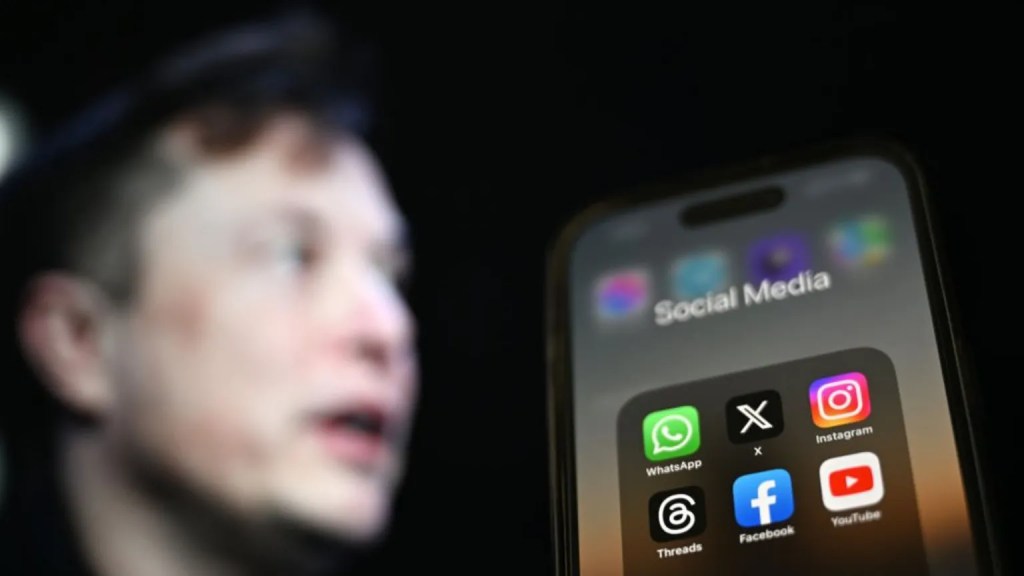
Musk indicated his intentions with his tweet “the bird is freed” after purchasing Twitter. He had previously criticized the platform for having excessive limits on free speech / Photograph: Getty Images
The rebranding of Twitter to X, orchestrated by Elon Musk, was more than just a logo change. The replacement of the iconic blue bird with a white X on a black background, embodying a minimalist and cold aesthetic, reflected the company’s increasingly belligerent stance.
This attitude culminated in the banning of X in Brazil at the end of August 2024, affecting 22 million users in the platform’s sixth-largest market. The decision by the Supreme Federal Court, led by Justice Alexandre de Moraes, came in response to X’s refusal to comply with Brazilian law by appointing a new legal representative in the country.
This judicial ruling was not an isolated incident but marked the culmination of a series of prior conflicts. The Brazilian Supreme Court had previously ordered the removal of accounts that spread misinformation and hate speech on the platform, issues that had become widespread under Musk’s leadership.
In retaliation, and following threats of imprisonment against a former legal representative for non-compliance with court orders, X closed its operations in Brazil. In another of his provocative statements, Musk accused the Justice of censorship, further escalating tensions.
Brazil’s polarized political landscape has fueled a significant clash. Judge Moraes, a controversial figure, has faced sharp criticism from the conservative right for his judicial rulings, which they argue have consistently opposed their interests in recent years.
Moraes has issued a series of rulings, including suspending the appointment of a candidate for Federal Police chief nominated by the former president. He ordered the arrest of Daniel Silveira, a lawmaker accused of spreading false information and defending Brazil’s repressive Institutional Act No. 5 (AI-5) from the military dictatorship era (1964–1985). Additionally, he ordered the detention of Anderson Torres, the former Public Security Secretary of Brasília, for alleged negligence related to the attempted coup and attacks on government buildings in January 2023.
On the other hand, many supporters of former president Jair Bolsonaro, often called the “Tropical Trump,” admire Musk. This admiration, combined with their opposition to Moraes, has led Brazil’s right-wing to celebrate Musk’s position. They interpret the ban on X as a form of resistance against what they see as state censorship. For this group, the Supreme Court’s decision is viewed as a direct attack on freedom of thought and the free flow of information, regardless of whether that information is false, biased, or harmful.
For Moraes’ supporters, however, the Supreme Court’s decision was a necessary move to protect national sovereignty and democratic order. They argued that the absence of legal representation made platforms like X “digital outlaws,” disregarding local laws while profiting from Brazilian users.
This episode is emblematic. Musk’s promise of “absolute freedom” on X quickly clashed with Brazil’s legal framework, where crimes such as racism, homophobia, and transphobia are punishable by law.
What Are the Risks to Democracy in the ‘Electronic Agora’?
The rise of social media marked an unprecedented moment in modern society. The technological revolution in information and communication broke down traditional barriers to who can create and share information. Globally, anyone with internet access can now produce content, influence opinions, and shape narratives instantly.
Recent data shows that about 62% of the world’s population regularly uses social media. According to estimates from Kepios, a digital usage research firm, nearly all internet users worldwide (94.5%) now engage with social media platforms.
In this context, freedom of expression and the plurality of voices, pillars of democratic societies, are constantly being questioned. This is because democratization also creates an environment conducive to disinformation, radicalization, and manipulation.
The internet, as many scholars point out, acts both as a tool for control and oppression [1] and as a means of empowerment and strengthening public discourse.
The attack on Brazil’s Supreme Federal Court (STF), in November 2024, carried out by Francisco Wanderley Luiz, a man who posted a photo inside the court on Facebook with the caption: “They let the fox into the henhouse, either unaware of his fangs or out of sheer stupidity”, tragically illustrates this dual potential.
To better understand this scenario, we must revisit the concept of the public sphere, formulated by the philosopher Jürgen Habermas[2]. This concept describes a space for rational and inclusive discussion, where individuals act as citizens to debate issues of common interest, free from direct state or market influences.
Historically, mass media played a crucial role in this model, functioning as the “fourth estate”[3], balancing the three traditional governmental branches: executive, legislative, and judicial.
However, with the digitization of the public sphere, these dynamics have changed radically. Instead of newspapers and TV broadcasters setting the public agenda, social media platforms now shape the debate, with their algorithms deciding which topics receive attention and which are silenced. This shift in power raises questions about how corporate platforms are fulfilling their political functions.
A new term has emerged: the “attention economy.” This concept describes how our attention has become a valuable resource, contested by companies and individuals. Instead of money or material goods, the currency in this economy is our limited attention.
Companies, social media platforms, and other agents compete to capture our focus, employing strategies like constant notifications, personalized algorithms, and infinite scrolling.
Ultimately, the more time we spend on a site or app, the more valuable we become to them, as this translates into more ad exposure, data collection, and revenue.
In this sense, German scholar Christian Fuchs[4] argues that giant corporations dominate the attention economy, describing it as the “colonization” of social media. He claims these platforms centralize opinion formation and expression, stating, “Liberal freedoms turn into their opposite in capitalist social media,” questioning the democratic participation within these spaces.
When Liberal Ideals Put National Security at Risk
This issue transcends Brazil’s borders, highlighting the complex struggle for regulatory power over tech giants. The debate encompasses freedom of expression, platform accountability, and the urgent need for a stronger international legal framework to address the impact of social media on modern society.
In the United States, for instance, where X’s owner resides, the approach to regulating digital platforms is typically less interventionist. Yet, this has not stopped the American government from considering banning TikTok, one of the world’s most popular social networks, over alleged threats to national security “of immense depth and scale.”
In April last year, President Joe Biden signed a bill enabling a potential ban on TikTok, citing concerns that its parent company could hand over data from about 170 million American users to the Chinese government.
As a result, ByteDance, TikTok’s Chinese owner, is required to sell its U.S. operations to a non-Chinese company by January 19, 2025, or face a complete shutdown in the United States.
This move revealed how concerns about privacy and security can outweigh the traditional narrative of individual freedom that dominates American political discourse.
For an Offline Youth
Late last year, Australia took a bold step. Its government passed a law banning the use of social media by children and teenagers under 16 years old. Platforms that fail to enforce the rule could face fines of up to 50 million Australian dollars.
“The burden will fall on social media platforms to demonstrate they are taking reasonable steps to prevent access. The burden will not fall on parents or young people,” said Australian Prime Minister Anthony Albanese.
According to the prime minister, the measure aims to protect young people from online dangers. This unprecedented restriction sparked immediate backlash.
Predictably, Big Tech responded by accusing the government of violating individual freedoms. Once again, the liberal argument was invoked. The freedom of expression narrative remains a convenient weapon to defend billion-dollar business models.
However, the idea of “freedom of expression” is fluid and shaped by specific political, cultural, and legal contexts. There is no universal consensus, and what is acceptable in one country may be inadmissible in another.
The Australian case, however, is more than a local dispute. It highlights a growing conflict, a geopolitical battle between governments and Big Techs. On one side are nation-states seeking greater control over the digital environment, aiming to regulate the flow of information and protect their citizens. Conversely, powerful tech companies are fighting to preserve their lucrative business models and unprecedented influence.
The mutual dependence is complex. People use these platforms to express their opinions, while governments rely on them to enforce laws and maintain legitimacy. This interdependence creates a tense dynamic, where companies’ resistance to national regulations and the lack of global consensus make internet governance a monumental challenge.
What to Expect from Virtual Democracy
When scrolling through someone’s social media feed, you probably notice how it mirrors their interests. This happens because algorithms, an invisible force, curate content based on engagement, relevance, and commercial interests.
While efficient at distributing information, these algorithms often limit access to diverse viewpoints, creating echo chambers and fueling polarization. This dynamic contrasts with Habermas’ ideal of an open and inclusive public sphere, where different perspectives converge toward rational consensus.
Additionally, when platforms decide what stays online or is removed without clear and transparent criteria, concerns about private censorship arise. A recent example involves accusations against Meta, which allegedly applied “shadow bans” on content related to the Israel-Gaza war, as reported by some media outlets.
Jack Balkin[5], a digital regulation expert, argues that to foster a healthy public space, platforms must become “trustworthy institutions guided by professional norms and public-oriented values.”
He says, “Market logic alone will not produce the culture and knowledge necessary for democratic self-governance.” Regulation, therefore, must create incentives for social media platforms to assume social responsibilities instead of prioritizing profits.
The ongoing debate over content moderation in the United States has taken a new turn following Meta’s recent announcement. On January 7, the company revealed it will phase out its third-party fact-checking program, opting instead for a “community notes” system reminiscent of the model employed by X (formerly Twitter).
Meta CEO Mark Zuckerberg framed this shift as a move to realign with the platform’s foundational principles of “freedom of expression,” arguing that the new approach is designed to minimize errors and censorship. However, the timing of the announcement has sparked scrutiny, particularly as it coincides with Donald Trump’s campaign for re-election, leading to speculation about the potential implications for political discourse.
Zuckerberg also underscored his commitment to increasing political content across Meta’s platforms, including Facebook, Instagram, and Threads. He claimed that user demand for such content is peaking.
Brazilian courts were once again at the center of controversy. Zuckerberg criticized some of their decisions, referring to them as “secret courts,” and announced plans to collaborate with Trump in opposing global efforts to regulate American companies and restrict free speech.
Recent events like these highlight that while public debate has found a new space online, it remains under corporate control and far from free of vested interests. It is no coincidence that Musk was appointed to join Trump’s administration as head of the Department of Government Efficiency (Doge).
The appeal to freedom of expression resonates strongly with users, making it a compelling justification. However, this is precisely why we need to shift our focus to the broader picture.
It is evident that the current model is flawed. Urgent action is needed to adopt hybrid solutions that balance the values of free speech. A model that combines clear and transparent regulations, incentives for plurality, and accountability for platforms could pave the way for a fairer and more inclusive digital space. Achieving this transformation, however, will require coordinated efforts from governments, civil society, and the tech companies themselves.
The virtual network is merely a medium. Social media platforms are tools, but they are governed by powerful corporations. There is a clear corporate dominance. Users are political agents, even when they don’t explicitly express their preferences. The algorithm operates as an invisible force, while political interests drive the machinery. Regulation is the only way to bring order to this chaos.
[1] Iosifidis, P., 2016. Social Media, Public Sphere and Democracy. In: P. Iosifidis and M. Wheeler, eds. Public Spheres and Mediated Social Networks in the Western Context and Beyond. Palgrave Global Media Policy and Business. UK: Palgrave Macmillan, pp. 13-37.
[2] Habermas, J., 1981. Theorie des kommunikativen Handelns. Frankfurt: Suhrkamp.
[3] Hunt, F.K., 1850. The Fourth Estate. London: D. Bogue.
[4]Fuchs, C., 2014. Social Media: A Critical Introduction. London: Sage. ISBN 978-1-4462-5731-9 (pbk), 978-1-4462-5730-2 (hbk).
[5] Balkin, J.M., 2019. How to Regulate (and Not Regulate) Social Media. Keynote address at the Association for Computing Machinery Symposium on Computer Science and Law, New York City, 28 October. Available at: [https://papers.ssrn.com/sol3/papers.cfm?abstract_id=3484114] [Accessed 5 January 2025].
 Amanda Oliveira
Deixe um comentário